
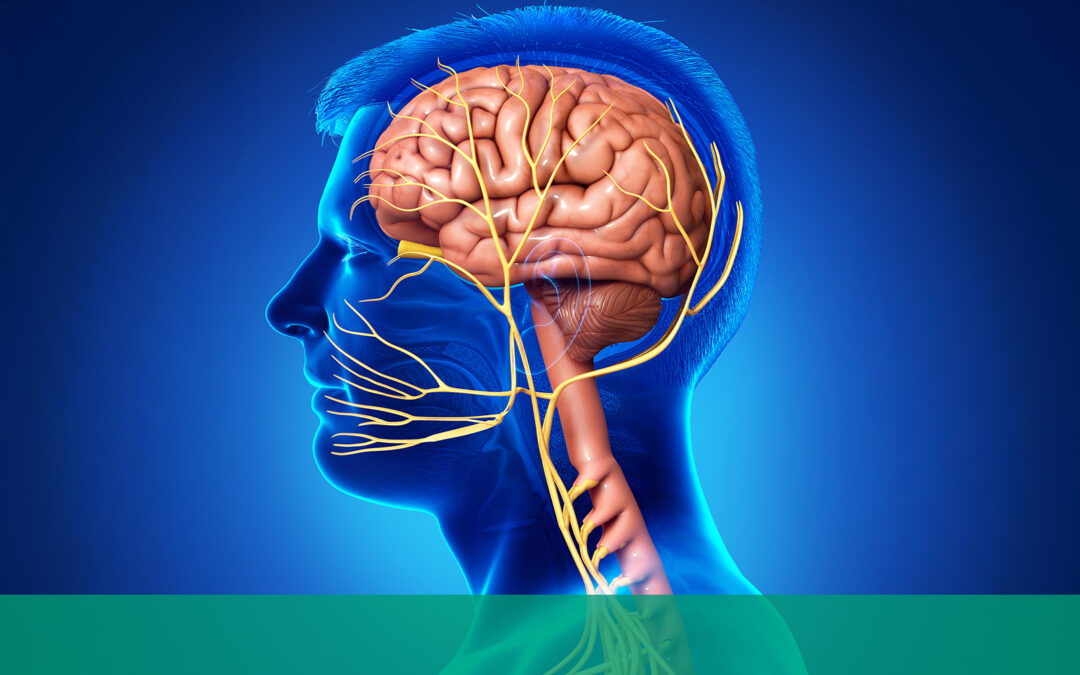
Your vagus nerve is a big deal, and I’m thinking that knowing more about it has the potential of improving the quality of our lives. When I describe it as a big deal, I not only mean in size, but also in extent and function. Not only is it the longest cranial nerve in the body, it also is considered the most complex, innervating multiple major organs and tissues.
The vagus nerve starts just behind the ears and travels in multiple branches from two thick stems down each side of the neck. It connects the brain with the lungs, the heart, the spleen the guts, the kidneys, the liver, the reproductive organs, and so on. It not only facilitates functions such as speech, swallowing, facial expression, and eye movement, but it also has a significant impact on mood, stress response, and mental health. When we think of the mind/body connection, the vagus nerve has to be included.
The vagus nerve is a two-way highway of communication, with numerous on- and off-ramps, bypasses, and beltways. It wanders throughout much of our body, transporting signals back and forth between the organs and the brain. The majority of signals being relayed on this superhighway are inputs from the organs and tissues going to the brain, not the other way around.
The vagus nerve regulates the automatic functions of breathing, heart rate, blood pressure, hormones, and digestion. It also regulates our fight, flight, or freeze reactions, which affect our anxiety levels and ability to handle emotional and physical stressors.
Because it innervates the stomach and intestines, it is involved in digestion and nutrient absorption. Because it plays a role in promoting the muscular movements of the intestines, constipation could be related to the vagus nerve, and not just how much fiber is being eaten.
Because it goes to the pancreas, it plays a part in controlling the release of digestive enzymes, insulin, and glucagon. Type 2 diabetes could be just as affected by vagus nerve inputs, and not just how much sugar is in the diet.
Because the vagus nerve has influence on the contraction and electrical conduction in the heart, blood clotting, and blood pressure, it may have more to do with heart palpitations, risk of developing blood clots, and hypertension than our cholesterol levels.
Research suggests that a disturbance of the microbiota-gut-brain axis may play a vital role in depression. And because the vagus nerve is a major link between the brain and gut, it is receiving a lot of attention as a potential therapeutic target in the treatment of depression. It’s not just a serotonin issue.
Are you interested in learning more about this amazing part of who we are? I hope so. Next month we will continue learning about the vagus nerve.


