
It was a Thursday morning—one of those ordinary mornings that quietly holds the potential to change everything. I had already showered, dressed, and was ready to start the day. Our little Yorkie, T.C.—short for “Too Cute”—was curled up on his blanket beside my wife Shelley. I reached down to pick him up.
Shelley stirred. “Good morning,” she said softly. “I can’t believe it’s already 5:00 a.m. I’ll get up and make your breakfast.”
But I knew the day she had just come through. Muscle spasms had taken a toll on her.
“No, Honey,” I said gently. “Sleep in. You need the rest.”
I closed the bedroom door quietly and carried T.C. across the house. It was below zero outside, with 14 inches of snow on the ground. At seven pounds, he wasn’t going anywhere without layers of clothing. The potty pads in the laundry room would do just fine.
What happened next took less than a second—and yet it would shape the next two months of my life. As I rounded the breakfast table, T.C. in my right arm and a portable doggie gate in my left, my foot caught the leg of a chair that hadn’t been pushed in. Before I could react, I was falling—face down toward the tile floor.
I remember holding T.C. in my right arm, trying to protect him, releasing him just before I hit. I remember flashes of white light as my forehead hit the tile. I remember pain in my shoulder—sharp, immediate, overwhelming.
Then came the helplessness. I couldn’t move. My nose was pressed against a rug, and was quickly becoming raw by my squirming. I called out for Shelley, again and again. But the bedroom door was closed, the fan and sound machine were on, and she had earplugs in.
Minutes turned into an hour. Then two. I prayed—not eloquently, not formally—but desperately. I even asked God to make T.C. into a little Lassie, to go bark and wake her.
Finally, I heard the bedroom door open.
“Shelley…” I called weakly.
She came running. “What happened?” she cried.
“Where’s T.C.?” I asked.
“He’s right here,” she said. “He hasn’t left your side.” That little pup had stayed with me the entire time.
Moments later, the ambulance arrived.
When Strength Is Stripped Away
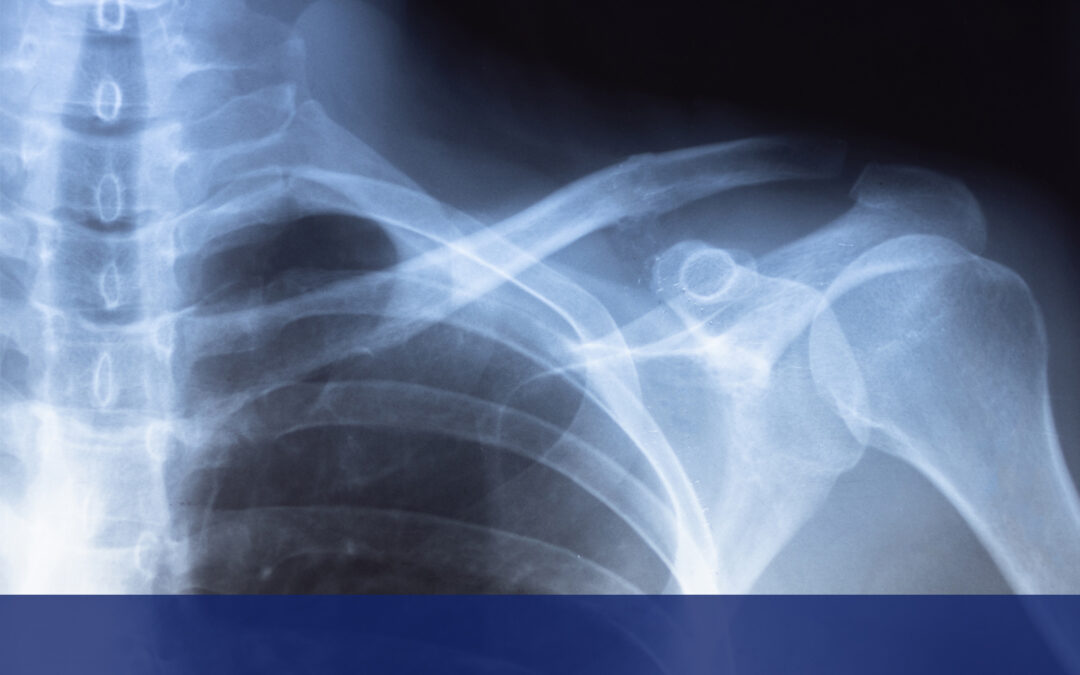
The diagnosis was sobering: a displaced fracture (the broken ends of the bone were out of alignment). It was in the distal end of the clavicle near the shoulder—the acromion, which plays a crucial role in shoulder movement and stability. This area is notorious for poor blood supply and extremely slow healing. Add to that the reality of my age, and the outlook wasn’t encouraging.
“You’ll be in a sling 24/7 for the next couple of months,” the doctor said. “We won’t know if it’s beginning to heal until then, and then we’ll decide if you need surgery.”
And just like that, independence vanished. The first ten days were brutal. Pain levels stayed at a nine or ten. My entire left side was battered. I couldn’t do anything for myself. Shelley became my hands, my strength, my support—helping me dress, helping me move, even helping me shower.
What a gift it is to have someone stand beside you when you are completely helpless. Paul wrote, “Bear one another’s burdens, and so fulfill the law of Christ” (Galatians 6:2). We lived that verse—not as theology, but as reality.
When There’s No Visible Progress
At the one-month follow-up, the X-ray showed nothing. No measurable healing. The doctor wasn’t surprised. He explained that sometimes healing in that area results only in fibrous tissue—scar tissue—not bone regrowth and restoration. Surgery might still be necessary.
We drove home with quiet questions in our hearts. Would it heal? Would I regain full use of my arm? Would this become a long-term limitation? But something began to shift—not in my body yet, but in our prayers.
The Turning Point: Thanking Before Seeing
For the first month, Shelley had prayed like most of us do in crisis: “Lord, please heal him. Please knit the two ends of that bone back together. Please restore full use of his arm.” But after that discouraging X-ray, something changed. Her prayers changed. Instead of pleading, she began thanking. “Lord, this healing is nothing for You to accomplish—but it means everything to us. Thank You for knitting his bones together. Thank You for restoring full use of his arm.”
Day after day, she thanked God for something we could not yet see. That is not natural. That is faith. “Now faith is the substance of things hoped for, the evidence of things not seen” (Hebrews 11:1). She was living that verse—thanking God for unseen evidence.
When God Answers Between the Reports
At the two-month follow-up, we sat waiting once again for the doctor’s report. He walked in smiling.
“Your X-ray looks amazing,” he said. “There’s strong calcification. I’d say you’re about 90 percent healed. This is astonishing—you’re way ahead of schedule. I wish we could tap into your gene pool for others, as you are a great healer. Must have great genes.”
“It’s God who is the Great Healer, and this is His answer to prayer,” Shelley said.
“You’re right,” he smiled. “This has to be the work of the Great Physician.”
A Miracle in the Middle
As we sat in the car afterward, Shelley prayed a prayer of thanksgiving. And it hit me. Thirty days earlier—no visible progress. Now—almost fully healed. The miracle didn’t happen in the doctor’s office. The miracle happened between X-rays.
God had been working when we couldn’t see it. God had been restoring what we couldn’t measure. God had been answering prayers that had shifted from desperation to trust. “For we walk by faith, not by sight” (2 Corinthians 5:7).
We often want visible proof before we believe. But God often works in the unseen—quietly, steadily, powerfully.
A Lesson for All of Us
How many times do we pray, and then wait anxiously for proof? How often do we say: “I’ll thank God when I see the answer”? But what if faith calls us to reverse that? What if we begin thanking God before the evidence appears?
“Be anxious for nothing, but in everything by prayer and supplication, with thanksgiving, let your requests be made known to God” (Philippians 4:6).Did you catch that? Not just prayer. Not just asking. But with thanksgiving—even before the answer is visible. Gratitude is not just a response to blessing—it is often the doorway to it. Something happens when we thank God ahead of time:
- It shifts our focus from fear to trust
- It aligns our hearts with His power
- It declares that we believe He is already at work
Where do you need to trust God today? Maybe your situation isn’t a broken bone. Maybe it’s a strained relationship, a health diagnosis, a financial burden, or a prayer that feels unanswered.
You’ve prayed. You’ve waited. And maybe, like that first X-ray, you’ve seen no visible progress. But here’s the truth: God is working between your reports.
What if, starting today, you changed your prayers? What if you began to say: Lord, thank You for what You are already doing—even if I can’t see it yet.
Because the same God who responds to faith to knit bones back together works in the unseen.
That same God is still at work in your life.
“Now to Him who is able to do exceedingly abundantly above all that we ask or think, according to the power that works in us” (Ephesians 3:20). Maybe it’s time we all begin thanking God—not just for what we see but for what He is already doing.


